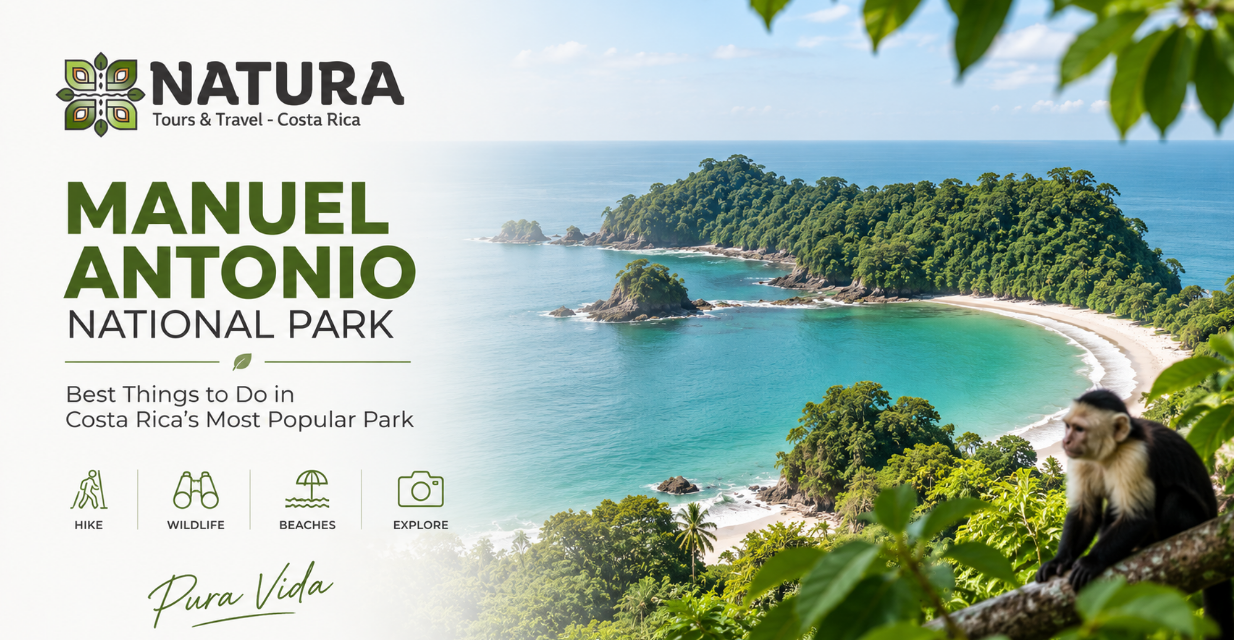
Manuel Antonio National Park is one of Costa Rica’s most accessible destinations for combining rainforest, wildlife, hiking and Pacific beaches in the same visit. Its trails, viewpoints, beaches and marine environments make it a strong choice for travelers who want nature without giving up easy access to the coast.
Located near Quepos in Puntarenas, the park protects tropical forest, beaches, mangroves, a lagoon, islands and marine areas. Visitors can encounter monkeys, sloths, coatis, raccoons, iguanas and many species of birds along the trails.
For travelers searching for things to do in Manuel Antonio, the park offers much more than a short walk through the forest. You can combine hiking, wildlife observation, viewpoints and beach time in a single visit.
The experience is also easy to integrate into a broader Costa Rica itinerary. Manuel Antonio can be combined with destinations such as Arenal, Monteverde, Uvita, Dominical or the Osa Peninsula — Natura Tours covers several of these combinations in its guide to Costa Rica’s best natural places to visit.
Natura Tours helps international visitors coordinate transportation, accommodation, tours and guides according to their travel plans. This can be particularly useful when Manuel Antonio is only one part of a multi-destination Costa Rica vacation.
What Makes Manuel Antonio National Park Special?
Quick Answer: Manuel Antonio National Park is special because it combines tropical rainforest, abundant wildlife, scenic trails and Pacific beaches within one protected area.
The park’s landscape is unusually diverse for a destination that can be visited in a single day.
Inside and around the park, travelers can experience:
- Tropical rainforest
- Pacific beaches
- Coastal viewpoints
- Mangroves
- Marine environments
- Islands
- Wildlife observation
- Hiking trails
The official Costa Rica Tourism Board describes the park as a destination with tropical wet forest, beaches, a lagoon, mangroves and islands. It also highlights species such as capuchin monkeys, sloths, coatis, raccoons, iguanas and numerous birds.
This combination explains why Manuel Antonio National Park Costa Rica remains one of the country’s most recognizable nature destinations.
Where Is Manuel Antonio National Park?
Quick Answer: Manuel Antonio National Park is located near Quepos on Costa Rica’s central Pacific coast, approximately 7 kilometers from the Manuel Antonio village area.
The park is in Puntarenas Province.
For travelers arriving from San José, the usual road route follows Route 27 toward Caldera and then Route 34 toward the Central Pacific and Quepos. The Costa Rica Tourism Board indicates that the park is about 7 kilometers from the end of Manuel Antonio village.
Its location makes it practical for several types of itineraries. You can visit Manuel Antonio as:
- A day trip from San José
- A stop between destinations
- Part of a Central Pacific vacation
- A multi-day stay near Quepos
- A beach and wildlife extension after visiting Arenal or Monteverde
Natura Tours currently lists Manuel Antonio among the destinations accessible through its Costa Rica day tours from San José.
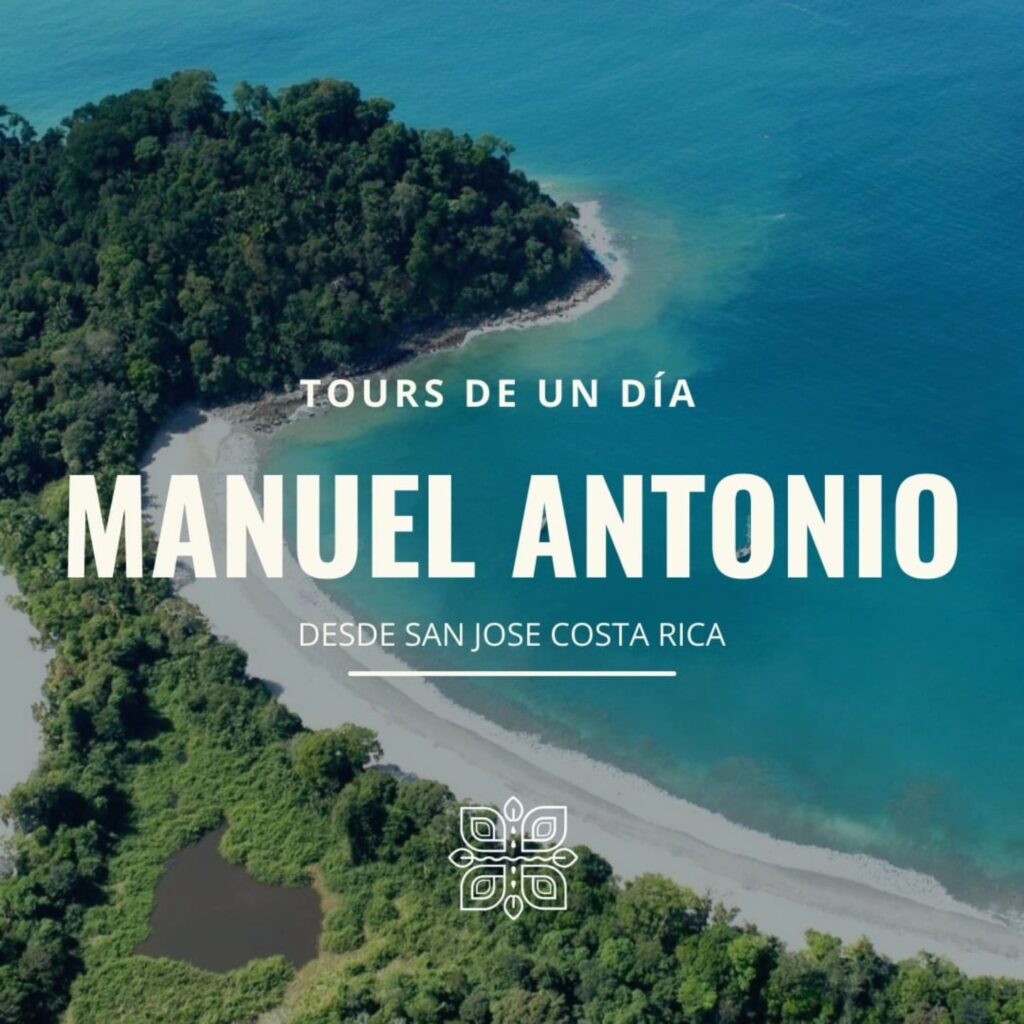
What Are the Best Things to Do in Manuel Antonio?
Quick Answer: The best things to do in Manuel Antonio include hiking the park’s trails, observing wildlife, visiting its beaches, enjoying viewpoints and combining the park with additional Pacific Coast activities.
1. Explore the Hiking Trails
Quick Answer: Hiking is one of the best ways to experience Manuel Antonio because the trails connect forest, viewpoints, beaches and different ecosystems.
The park has several established trails with different lengths and characteristics. The official tourism FAQ identifies six principal trails:
- La Catarata Trail
- El Perezoso Trail
- Punta Catedral Trail
- Playa Gemelas Trail
- Mirador Trail
- Congo Trail
There is also an elevated metal boardwalk designed to improve accessibility for visitors, including children, seniors and people with disabilities. The trails provide different perspectives of the park.
La Catarata Trail This trail leads toward a small waterfall and provides a relatively short walking option near the park entrance. The official tourism information lists it at approximately 900 meters.
Punta Catedral Trail This trail connects Espadilla Norte and Espadilla Sur beaches and includes viewpoints along the route. The official tourism FAQ lists the trail at approximately 1.4 kilometers.
Mirador Trail The Mirador Trail leads to a viewpoint overlooking part of the coastal landscape. It is approximately 1.3 kilometers according to the Costa Rica Tourism Board’s current visitor information.
The important point is that you do not need to walk every trail to appreciate the park. Choose according to your available time, physical condition and interest in hiking.
Can You See Wildlife in Manuel Antonio National Park?
Quick Answer: Yes. Manuel Antonio is well known for wildlife observation, including monkeys, sloths, coatis, raccoons, iguanas and many bird species.
Wildlife is one of the main reasons travelers search for things to do in Manuel Antonio. However, animals are wild — no responsible guide should guarantee a specific sighting.
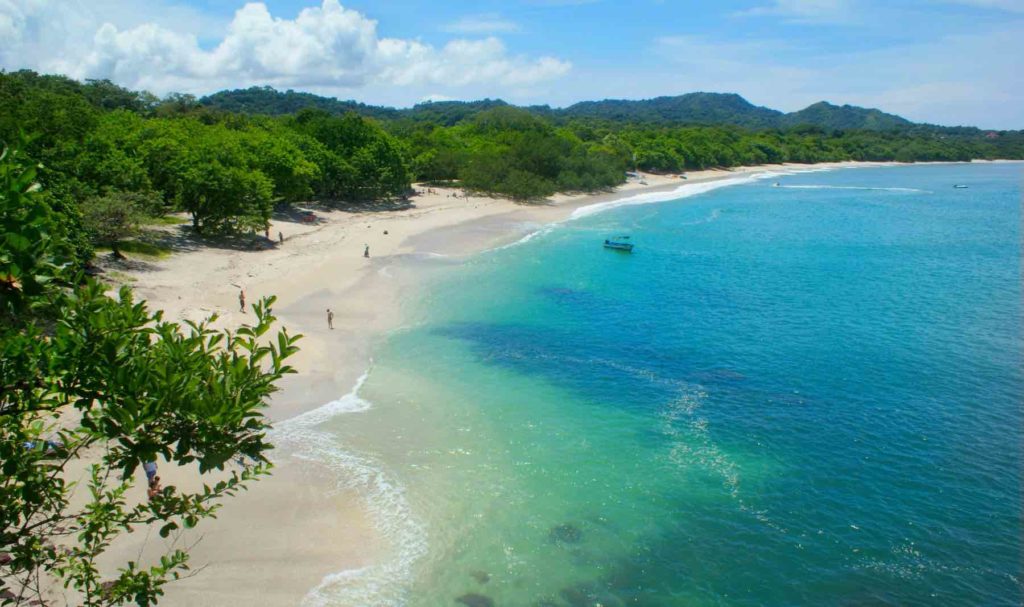
The official tourism information identifies several species commonly associated with the park, including capuchin monkeys, sloths, coatis, raccoons, iguanas and birds. It also mentions the squirrel monkey population associated with Manuel Antonio.
How to improve your wildlife experience
To increase your chances of noticing animals:
- Walk slowly
- Keep noise low
- Look above and below the trail
- Watch the vegetation
- Bring binoculars if available
- Listen for bird calls
- Follow your guide’s instructions
- Never feed wildlife
A naturalist guide can also help identify animals that are difficult for an untrained visitor to notice.
Why Are the Monkeys and Sloths So Important to Visitors?
Quick Answer: Monkeys and sloths are among the animals visitors commonly hope to see, but responsible wildlife observation requires keeping distance and never feeding or touching them.
The presence of wildlife is one of the main attractions of Manuel Antonio. Capuchin monkeys are frequently associated with the park, and sloths can also be observed in the forest.
However, tourists should not approach animals for photographs. Do not offer food. Do not make noises to attract them. Do not attempt to touch them. These simple rules protect the animals and create a safer experience for visitors.
2. Visit Manuel Antonio Beach
Quick Answer: Manuel Antonio Beach is one of the park’s principal attractions and can be combined with hiking and wildlife observation during the same visit.
The official ICT park guide identifies Playa Manuel Antonio as one of the principal attractions inside the park. It describes the beach as approximately 598 meters long and notes its suitability for snorkeling.
This makes the beach a natural transition point after hiking. You can spend part of the morning exploring trails and then use the remaining time to relax near the coast. Remember that conditions in the ocean change — always follow posted instructions and local recommendations before entering the water.
3. Explore Espadilla Sur Beach
Quick Answer: Espadilla Sur is another important beach inside Manuel Antonio National Park and can be combined with the park’s coastal trails.
The ICT guide describes Espadilla Sur as approximately 900 meters long and notes that it is located between the park’s northern boundary and Punta Catedral. The beach’s location within a bay influences its wave conditions. Visitors should still evaluate current conditions before swimming.
4. Walk to Punta Catedral
Quick Answer: Punta Catedral is one of the best places in Manuel Antonio for combining a short hike with coastal views.
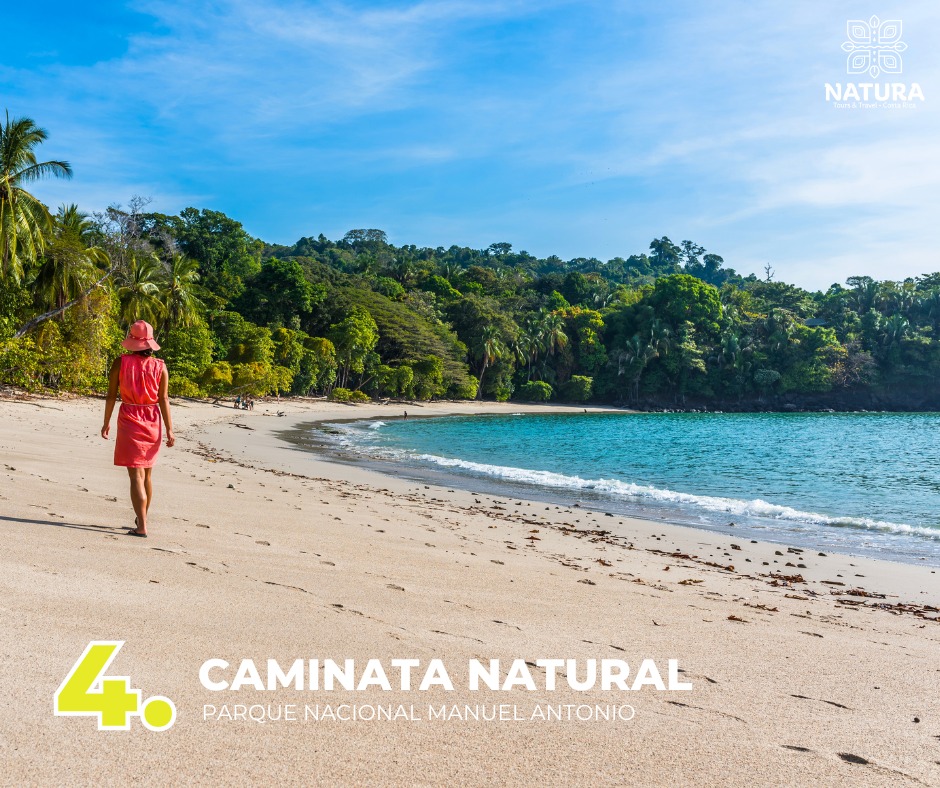
The area connects Manuel Antonio and Espadilla Sur beaches. The trail provides several viewpoints over the Pacific coast, making it a strong option for travelers who want photography and scenery without dedicating the entire visit to a demanding hike. The official tourism information specifically identifies Punta Catedral as one of the park’s principal attractions.
5. Enjoy the Viewpoints
Quick Answer: Manuel Antonio’s viewpoints allow visitors to see the relationship between tropical forest, beaches, rocky coastline and the Pacific Ocean.
Viewpoints are especially valuable for travelers who enjoy photography. For the best experience:
- Keep your camera ready
- Avoid blocking narrow viewpoints
- Respect other visitors
- Do not climb restricted areas
- Follow trail signs
The Mirador Trail is specifically designed to reach a coastal viewpoint.
6. Combine the Park With Other Things to Do in Manuel Antonio
Quick Answer: A Manuel Antonio itinerary can extend beyond the national park with activities such as catamaran trips, kayaking, mangrove experiences, beaches and other Pacific Coast excursions.
The park itself can easily occupy a large part of a travel day. If you are staying in the area for several nights, you can add other experiences. Depending on availability and season, options may include:
- Catamaran tours
- Kayaking
- Paddleboarding
- Mangrove tours
- Sport fishing
- Surfing
- Beach activities
- Wildlife excursions
This is where staying near Quepos or Manuel Antonio provides an advantage — you do not have to leave the region after visiting the national park.
Is Manuel Antonio National Park Good for Families?
Quick Answer: Yes. Manuel Antonio can work very well for families because it combines accessible nature experiences, wildlife, beaches and different trail options.
Families should choose activities according to the children’s ages and physical abilities. The park’s accessible boardwalk is particularly useful for some visitors with mobility considerations.
For families, a good strategy is to avoid trying to complete every trail. Instead:
- Enter early
- Walk at a comfortable pace
- Look for wildlife
- Visit a viewpoint
- Spend time at an appropriate beach
- Leave enough energy for the return journey
This approach is usually more enjoyable than turning the visit into a race.
Is Manuel Antonio Good for Couples?
Quick Answer: Manuel Antonio is an excellent choice for couples who want to combine wildlife, hiking, beaches and Pacific Coast scenery.
Couples can create a balanced itinerary. For example:
- Morning: National park and wildlife observation
- Midday: Beach
- Afternoon: Return to the hotel and relax
- Evening: Dinner near Manuel Antonio or Quepos
A longer stay also allows couples to add a catamaran excursion or another coastal activity.
How Much Time Do You Need in Manuel Antonio?
Quick Answer: One full day is enough to experience the national park, but two or three nights in the area provide more time for beaches, wildlife and additional activities.
The ideal length depends on your overall Costa Rica itinerary.
One day — best for travelers with limited time, visitors based in San José, or travelers passing through the Central Pacific.
Two nights — best for families, couples, or travelers who want the park plus beach time.
Three or more nights — best for travelers who want multiple Pacific Coast activities, wildlife enthusiasts, or visitors who prefer a slower itinerary.
Natura Tours currently offers Manuel Antonio as a destination within both day-tour and multi-destination Costa Rica itineraries, including its 12-night Costa Rica itinerary.
What Are the Current Manuel Antonio National Park Hours?
Quick Answer: Current official information should be checked immediately before visiting because the Costa Rica Tourism Board and SINAC pages currently display different operating-hour information.
The current SINAC page states that Manuel Antonio National Park is open Wednesday through Monday from 7:00 a.m. to 3:00 p.m., with Tuesdays closed. The current Visit Costa Rica page displays 7:00 a.m. to 4:00 p.m., Tuesday through Sunday.
Because these official sources currently differ, travelers should verify the schedule directly with SINAC before planning their visit. This is exactly the type of information that can change and should not be assumed from an old blog post.
How Do You Buy Tickets for Manuel Antonio National Park?
Quick Answer: Official information states that park tickets are sold through the SINAC online system, and visitors should have their identification available when presenting their reservation.
Visit Costa Rica directs visitors to the SINAC online ticket system and states that physical or digital identification should be presented with the reservation number. The SINAC page also directs visitors to its online services for park admission.
Before traveling:
- Check the official SINAC system
- Verify the date
- Verify the park schedule
- Complete the required reservation
- Keep your reservation information available
- Carry your passport or accepted identification
Do not rely on unofficial ticket sellers.
Does Manuel Antonio National Park Have Parking?
Quick Answer: The park itself does not have a parking area, according to the Costa Rica Tourism Board.
This is important for travelers driving a rental car. Do not assume that you can park directly at the park entrance. Visit Costa Rica specifically warns that Manuel Antonio National Park does not have its own parking area. If you are driving, plan your parking arrangements before arriving. This is another reason why private transportation or an organized tour can make the visit easier.
What Should You Bring to Manuel Antonio National Park?
Quick Answer: Bring water, comfortable footwear, sunscreen, insect repellent and only the items permitted under current park regulations.
The official Costa Rica Tourism Board recommends appropriate footwear, water, sunscreen and insect repellent for the park’s trails. A practical list includes:
- Comfortable walking shoes
- Reusable water bottle
- Sunscreen
- Insect repellent
- Hat
- Lightweight clothing
- Small backpack
- Camera
- Binoculars if available
- Identification
- Digital or printed reservation information
What should you not bring? Single-use plastics are not allowed. Visit Costa Rica specifically reminds visitors about this restriction. Park rules can change, so check the current official requirements before your visit.
Can You Bring Food Into Manuel Antonio National Park?
Quick Answer: Current SINAC information states that food cannot be taken into the beaches and trails, while food services operate in designated areas inside the park.
This is important because many visitors assume they can bring a picnic. The current park information indicates that food consumption is restricted to designated areas. Follow the rules provided at the entrance — these regulations help reduce waste and interactions between visitors and wildlife.
Should You Hire a Guide at Manuel Antonio National Park?
Quick Answer: A qualified naturalist guide can significantly improve wildlife observation because trained guides know how to interpret animal behavior and identify species that visitors may overlook.
A guide is not simply someone who walks in front of the group. A good naturalist can explain animal behavior, plant species, ecosystems, conservation, bird calls, local history and relationships between species.
SINAC currently lists a guided-tour concession inside the park operated by the Association of Certified Tourist Guides of Quepos. For first-time visitors, a guided experience can be especially useful.
How Does Natura Tours Improve the Manuel Antonio Experience?
Quick Answer: Natura Tours helps coordinate transportation, tours, accommodation and itinerary timing so travelers can experience Manuel Antonio without managing every logistical detail themselves.
A Manuel Antonio visit looks simple on a map. In practice, several details need coordination: transportation, park admission, entry schedule, guide availability, hotel location, other activities and return transportation.
Natura Tours, registered in the ICT’s official tourism operator directory, currently offers day tours from San José and includes Manuel Antonio among the destinations that can be reached on a day itinerary. The agency also creates personalized itineraries based on traveler interests, budget and available time, listing vacation packages, day tours, accommodation and transportation among its services. For international travelers, this can reduce the amount of logistical work required before the trip.
What travelers say
“They organized our trip according to our taste and budget. We always had guidance and support throughout the country. Highly recommended.” — Claudia Pérez, verified Google review, May 2025
“The organization and planning of the trip were flawless, with immediate responses to any question or urgent need, and wonderful service throughout. The hotels, tours and guides included were all excellent. 100% recommended!” — Isabell Stein, verified Google review, April 2025
What Is the Best Manuel Antonio Itinerary?
Quick Answer: For a first visit, combine the national park, wildlife observation, one or two trails, a beach and enough time to return without rushing.
Morning — Arrive early and enter the park. Focus on wildlife, forest trails, photography and interpretation from your guide.
Midday — Move toward the beach area. Take time to rest and enjoy the coastal landscape.
Afternoon — Complete the remaining trail or viewpoint that fits your energy level, then leave the park according to the official operating schedule. If you are staying overnight, use the afternoon for another activity outside the park.
What Are the Best Tips for Visiting Manuel Antonio?
Quick Answer: The best strategy is to reserve admission in advance, arrive prepared, use appropriate footwear, follow park regulations and allow enough time to enjoy the forest instead of rushing through it.
- Check the official schedule before every visit — current official sources show different hours, so verify directly with SINAC.
- Buy tickets through the official system and avoid unofficial sellers.
- Arrive prepared with water, sunscreen and insect repellent.
- Hire a qualified guide to improve wildlife interpretation.
- Do not feed animals — this protects wildlife and visitors.
- Do not use single-use plastics — follow the current park regulations.
- Do not chase wildlife — let animals move naturally.
- Wear comfortable shoes — several trails involve walking over natural terrain.
- Do not try to complete everything — choose trails based on your physical condition and available time.
- Leave room for the unexpected — wildlife observation is unpredictable, and that is part of the experience.
Manuel Antonio National Park and Sustainable Tourism
Quick Answer: Responsible tourism in Manuel Antonio means following park regulations, respecting wildlife and minimizing your impact on the protected environment.
A national park is not simply a tourist attraction — it is a protected ecosystem. Visitors should:
- Stay on marked trails
- Keep distance from animals
- Never feed wildlife
- Avoid collecting natural materials
- Reduce waste
- Respect park staff
- Follow signs
- Respect other visitors
The objective is to allow future travelers to experience the same ecosystems.
Manuel Antonio National Park: Quick Comparison
| Experience | Best For | Recommended Approach |
|---|---|---|
| Wildlife | Nature lovers | Hire a naturalist guide |
| Hiking | Active travelers | Choose trails according to fitness |
| Beaches | Families and couples | Combine with a morning park visit |
| Photography | Content creators | Bring a compact camera or phone |
| Birdwatching | Wildlife enthusiasts | Visit with a guide |
| Viewpoints | Photographers | Include Punta Catedral or Mirador |
| Family visit | Parents with children | Avoid overloading the itinerary |
| Day trip | Short vacations | Organize transportation in advance |
Frequently Asked Questions About Manuel Antonio National Park
Is Manuel Antonio National Park worth visiting? Yes. The park combines rainforest, wildlife, trails, viewpoints and Pacific beaches in one destination. This combination makes it particularly convenient for travelers with limited time.
What are the best things to do in Manuel Antonio? The main experiences include hiking, wildlife observation, visiting Manuel Antonio and Espadilla Sur beaches, exploring viewpoints and combining the park with other Pacific Coast activities.
Can I see sloths and monkeys in Manuel Antonio National Park? Yes, these animals are associated with the park and can sometimes be observed along the trails. However, wildlife sightings are never guaranteed.
How much time should I spend in Manuel Antonio National Park? One day is enough for a focused visit. Staying two or three nights in the area gives you more time for beaches and other activities.
Can I buy tickets at the park entrance? Current official information directs visitors to purchase tickets through the SINAC online system. Check the official system before traveling.
Is a guide necessary at Manuel Antonio? A guide is not simply about getting into the park. A qualified naturalist can help identify wildlife and explain the ecosystem. SINAC lists a certified guide service operating inside the park.
Conclusion
Manuel Antonio National Park offers a rare combination of rainforest, wildlife, viewpoints and beaches in one accessible destination.
The best way to experience it is not to rush. Plan your admission. Choose your trails. Consider a naturalist guide. Leave time for the beach. Respect the wildlife. And verify current park regulations before traveling.
For international visitors, Natura Tours can simplify the process by coordinating transportation, tours, accommodation and the rest of the Costa Rica itinerary. Manuel Antonio can also become part of a larger journey through Costa Rica — you can combine it with Arenal, Monteverde, Uvita, Dominical or other destinations depending on your available days, as outlined in Natura Tours’ guides to places to visit in Costa Rica and what to do in Costa Rica.
Thanks to the Instituto Costarricense de Turismo and CATUGOLFO for the invitation to discover and promote the destinations and experiences of Costa Rica.
Redes Sociales de Natura Tours
Facebook:
Natura Tours en Facebook
Instagram:
Natura Tours en Instagram
YouTube:
Natura Tours en YouTube
Google Reviews:
Leave a review for Natura Tours
Google Business Profile:
Natura Tours & Travel Costa Rica on Google
You can See, Costa Rica Adventure Trip: 5 Best Natural Places to Visit in Costa Rica